A Couple’s Guide to RV Living: How to Make It Work Long-Term (Spring 2026)
Without Losing Your Mind or Each Other
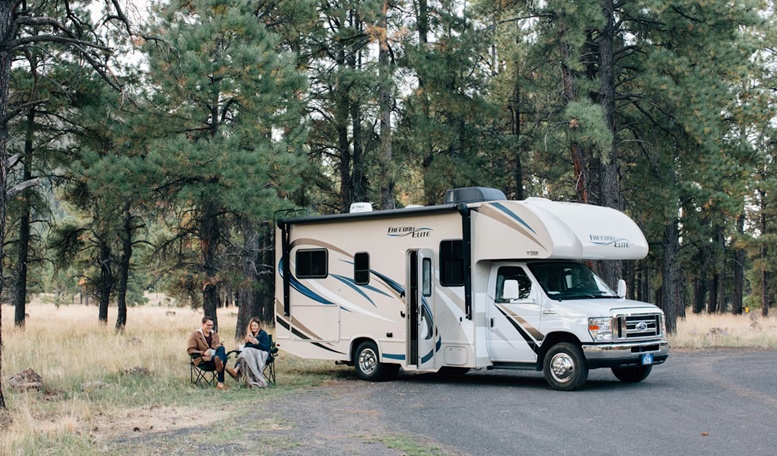
There’s a very specific moment most couples hit when they start talking about RV living. It’s somewhere between “this sounds romantic and freeing” and “wait… are we really about to live in 200 square feet together?”
Both reactions are totally normal and probably even expected. RV life can absolutely be like living in a dream. After all, you’re waking up in new landscapes, leisurely mornings with coffee in the fresh air, sunsets that feel like private shows.
But long-term RV living as a couple is less about Insta opportunities and more about communication, organization, and emotional maturity. This guide isn’t about pretending that RV living as a couple is easy, because that just isn’t realistic or productive.
Rather, it’s all about how couples who thrive on the road actually make it work – over months, years, changing seasons, and shifting moods. It’s not always easy, but if you follow this guide, you’re on the road to success.
First: Why RV Living Can Be Incredible for Couples
Let’s start with the good stuff, because there is a reason so many couples choose this lifestyle.
RV living naturally strips life down to essentials, which can be freeing in so many ways. You’re not distracted by excess space, clutter, material things, the rat race, or endless errands. You make decisions together – where to go next, how long to stay, when to move, and so much more.
There’s a shared sense of purpose that’s hard to replicate in stationary life. You become teammates in a very real way, and it’s a beautiful thing!
It also forces presence. You can’t hide in separate rooms indefinitely, or just be doing your own thing all the time. You notice each other’s lifestyles and tendencies so much more clearly – when one of you needs quiet, when the other needs to do something active – even when tension is brewing before it turns into a full argument.
If you and your significant other are willing to grow, RV life seriously improves emotional awareness. However, it’s important to note that closeness only works if you pay special attention to boundaries, autonomy, and communication. Trust me when I say that love alone is not enough in 200 square feet.
The Biggest Shift: You’re Not Just Partners, You’re Now Managers
Long-term RV living turns couples into managers of a small, mobile household that involves all kinds of new logistics and responsibilities that are probably new to both people. If they aren’t figured out together or at least aren’t shared fairly, resentment builds fast.
Successful RV couples usually divide responsibilities early on. I’d advise addressing them before you have to deal with them head-on. One person might naturally gravitate toward driving, route planning, and mechanical maintenance. The other might manage budgeting, reservations, or daily organization.
I personally love driving and being in control of everything involved with it – this leaves everything else regarding organization up to my SO.
What matters is that both people feel ownership and like both have an equal say in what’s going on. If one partner becomes the default decision-maker or problem-solver, an imbalance creeps in. RV life is not the place for passive participation – if both of you aren’t entirely in it, it’s really not likely to work.
Choosing the Right RV (Yes, This Is a Relationship Decision)
RV selection is often framed as a technical or financial choice, but for couples, it’s also emotional and relational.
Space matters more than you think. Not just square footage, but layout. Can one of you sit at a table while the other moves around without bumping elbows? Is there a door, or at least a visual divider, between the sleeping and living areas? Can one person wake up early or stay up late without disrupting the other?
While you’re obviously going to be spending a lot of time in close quarters, it’s still important to be able to have a bit of time to yourself, even if it’s just the next space over.
You don’t need separate rooms, but you do need areas that feel individually claimable. A dinette that converts into a workspace, a passenger seat that becomes a reading nook, a bed area where one person can decompress quietly, etc.
If you’re planning to work remotely, this is not an option. Two laptops, two Zoom calls, one small RV – it’s doable, but only with thoughtful layout and noise management. Luckily, our work schedules almost never conflict, but this isn’t always the case for couples.
Communication Is the Real Engine of RV Life
Here’s the honest truth that I’ve come to realize from living in an RV together: RV living doesn’t create relationship issues; it magnifies the ones that already exist. Not only that, but communication can solve NEARLY everything.
Small annoyances become more noticeable when there’s nowhere to escape. Differences in cleanliness, routines, and stress responses arise quickly. Couples who thrive long-term aren’t the ones who never fight – rather, are the ones who know how to repair or even address things before becoming an issue.
I also recommend doing regular check-ins about what you feel is working, what could use work, what you can do without, and what needs some tweaking. A lot of times, logistics cross over with emotions, so both aspects are important to address. It’s a huge way to avoid resentment from building.
Learning how to pause arguments, take breaks (even if that just means stepping outside), and revisit conversations calmly is also a highly valuable survival skill.
Alone Time Isn’t Optional, But Essential
This is one of the biggest surprises for couples transitioning to RV life: loving someone doesn’t mean wanting to be with them all the time.
Healthy long-term RV couples actively protect alone time. That might mean solo walks, one person staying back at camp while the other explores, or scheduled “off-grid” time with headphones and a book. It might mean one person drives while the other mentally checks out with music or a podcast.
The key is normalizing solitude instead of interpreting it as distance. Wanting space doesn’t mean something is wrong. It’s very human, very healthy, and very necessary for couples who make this work.
Conflict in a Small Space: How to Fight Fair
Arguments hit differently in an RV. You can’t storm off to another room. You can’t slam doors without it being very obvious. Everything feels louder and more immediate.
That’s why couples who last long-term develop rules around conflict. Some agree to pause arguments if voices start to rise. Others have a rule that no intense discussions happen while driving or late at night. Many agree that if one person asks for space, it’s respected without judgment or pushing further.
You’ll surely come up with your own rules, but it’s really important to honor them, even in heated moments.
Money Conversations: The Silent Relationship Stressor
Financial alignment is one of the biggest predictors of long-term success in RV living as a couple.
RV life can be cheaper than traditional living, but it’s not automatically inexpensive. Fuel costs fluctuate. Maintenance is unpredictable. Campsite fees vary wildly. Without shared financial expectations, stress creeps in.
Couples who do well talk openly about budgets, priorities, and comfort levels. Are you more comfortable boondocking to save money, or do you prefer paid campgrounds with amenities? How often are you willing to move? What counts as a “worth it” splurge?
Transparency is key. Even if one person manages finances day-to-day, both should understand the bigger picture. Money secrecy in a small space is a fast track to resentment.
Routine vs Freedom: Finding the Sweet Spot
One of the biggest myths about RV life is that it’s all spontaneity. In reality, most long-term RV couples thrive on routine—with flexibility layered on top.
Routine creates stability. It might look like consistent work hours, morning rituals, regular movement days, or weekly planning sessions. This structure reduces decision fatigue and creates emotional safety.
Within that structure, freedom still exists. You can change locations. Extend stays. Take detours. But having a baseline rhythm keeps the lifestyle sustainable rather than chaotic.
Travel Pace: Faster Isn’t Better
Many couples burn out not because RV life is hard, but because they move too fast.
Constant travel is exciting at first, but it’s emotionally and physically draining long-term. Packing up, driving, setting up, and adjusting repeatedly leaves little energy for connection. Couples who last tend to slow down—staying longer in places, planning fewer drive days, and allowing themselves to settle.
Slower travel also creates space for deeper experiences. This is something I absolutely LOVE about RVing. You’re not just passing through like you would in most cases; you’re really living it. You can stay for days or weeks on end, experiencing a place like it deserves to be and really get to know it.
Intimacy on the Road (Yes, Let’s Talk About It)
Romance in an RV is… different. There’s less privacy, less spontaneity, and sometimes very thin walls between you and your neighbors.
But intimacy isn’t just physical. Emotional closeness often deepens on the road, as you take on shared challenges and figure them out together. Quiet moments under the stars feel more meaningful, and you get to know each other in ways you wouldn’t in “normal” living situations. Many couples find that while the logistics of intimacy change, the quality improves.
With that being said, intentionality matters. Date nights don’t disappear just because you’re traveling. Instead of going out to eat at a restaurant, perhaps it looks like a sunset picnic with a shared bottle of wine, or a night where you put phones away and just exist together.
When One Partner Loves RV Life More Than the Other
This is something that I hadn’t considered, as we were both so on board (literally) with the whole RV life idea. However, this happens more often than people admit. I have a couple of friends who encountered a situation like this, and it’s not always easy to deal with.
Sometimes one person feels energized by constant movement while the other misses more stability. Sometimes one partner thrives on minimalism while the other misses space and predictability. These differences don’t mean RV life is doomed, but they do require an honest conversation.
Compromise is crucial, so sometimes that may be spending longer in one place for more stability and consistency. Something that worked really well for my friends was incorporating occasional short-term rentals.
Planning regular visits “back home” or simply acknowledging that RV life is a chapter, not a forever plan, can make a big difference, too. There’s no failure in adjusting expectations, as this is a new experience for everyone. The goal isn’t to force RV life to work – it’s to support the relationship.
Mental Health on the Road
RV living can be incredibly grounding, but it can also be isolating – especially for couples who travel full-time. I’m a yapper, so it was really important for me to have some kind of community, even if it wasn’t always in person.
Community doesn’t automatically appear just because you’re mobile. Successful couples must make an effort to build connection, whether that’s through RV communities, online groups, recurring campgrounds, or friendships formed on the road.
Growing Together (or Apart): The Honest Reality
Long-term RV living accelerates growth, whether that’s closer together or further apart. For some couples, that growth brings them closer. For others, it reveals incompatibilities that were easy to ignore in traditional life.
Neither outcome is a failure, and I take this as a blessing.
Couples who stay curious about each other, flexible in their expectations, and compassionate during transitions are the ones who navigate RV life with grace – whether it lasts two years or ten.
Final Thoughts: RV Living Works Best When the Relationship Comes First
RV life is not a relationship fix; rather, it’s a relationship amplifier.
When couples enter it with mutual respect, communication skills, and a willingness to adapt, it can be deeply fulfilling. When they make it out to be an escape from unresolved issues, it tends to expose them quickly.
The couples who make RV living work long-term aren’t perfect. They argue, get tired, change plans. But they choose each other – again and again – within the constraints and beauty of a smaller life.
If you’re considering RV living as a couple, don’t ask “Can we handle this?” Ask instead: Are we willing to grow through it together?
If you can answer that honestly, then you’re already on the road to success!